
100 Envelope Challenge for Kids: Age-Appropriate Rules & Math Scales
Rule of thumb: Scale the standard $5,050 challenge down to match your child's age tier—$50.50 total for young kids (1¢–$1 scale) or $252.50 for pre-teens (50¢–$5 scale). Using a tactile A5 budget binder turns abstract money lessons into an engaging, multi-week saving habit.
Key Takeaways for Teaching Kids to Save
- $50.50 to $252.50 Target Ranges: Scaling the 100 envelopes down by factors of 0.01x or 0.05x makes savings targets mathematically attainable for kids earning $2 to $10 per week.
- Tactile Learning Outperforms Digital Apps: Physical cash, clear waterproof pouches, and dry-erase tracking build concrete neural connections that abstract digital bank numbers cannot replicate for kids under 12.
- Sustained 25-Week Engagement: Spacing out 2 to 4 envelope stuffings per week maintains long-term momentum without exhausting a child's weekly allowance.
- Milestone Rewards Beat Burnout: Introducing mini-celebrations at envelope #25, #50, and #75 keeps younger children motivated through mid-challenge slumps.
Age-Tiered Savings Matrix: Target Amounts & Weekly Contributions
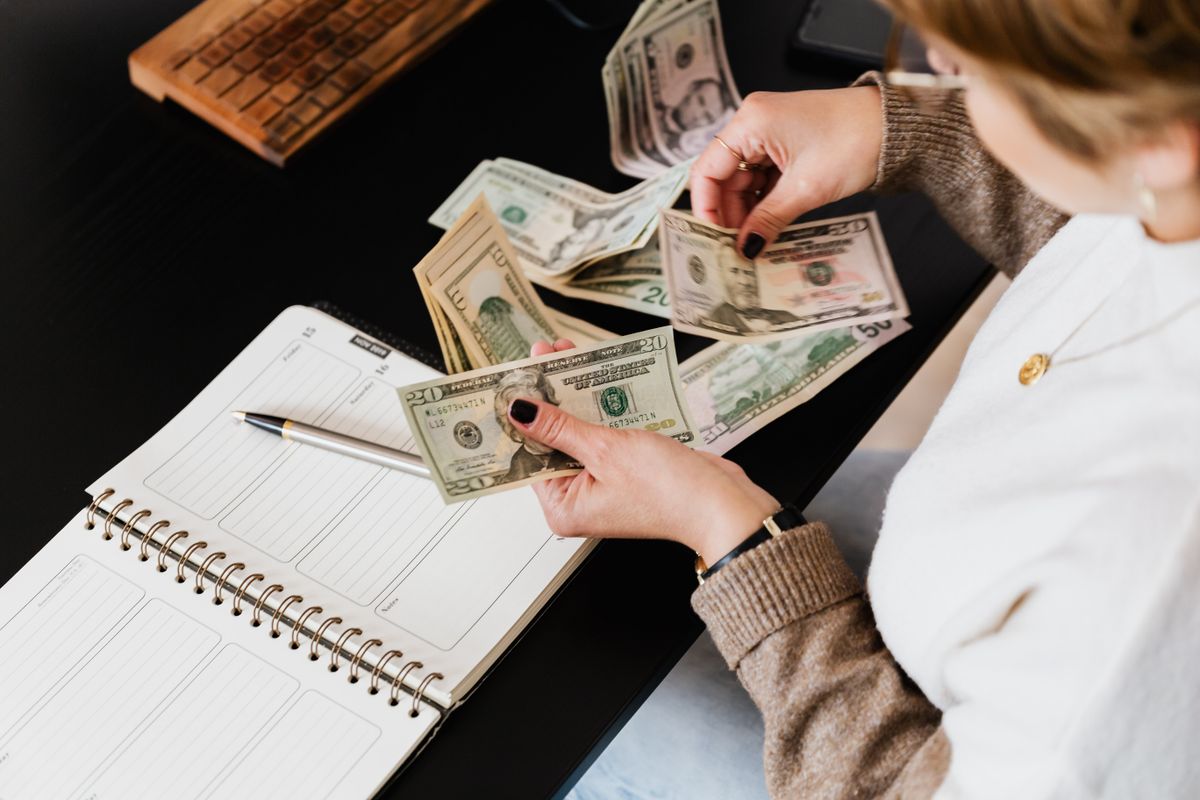
Photo by https://kaboompics.com/ on Pexels
| Age Group | Envelope Formula Range | Weekly Contribution (2 Envelopes) | Total Savings Yield | Core Financial Concept |
| --- | --- | --- | --- | --- |
| Toddler / Early Readers (Ages 3–5) | 1¢ to 100¢ (0.01x Multiplier) | $0.10 – $1.50 / week | $50.50 | Coin Recognition & Counting |
| Elementary Savers (Ages 6–9) | 5¢ to $5.00 (0.05x Multiplier) | $0.50 – $7.50 / week | $252.50 | Addition & Value Recognition |
| Pre-Teens (Ages 10–13) | 10¢ to $10.00 (0.10x Multiplier) | $1.00 – $15.00 / week | $505.00 | Budgeting & Long-Term Goal Setting |
| Teens / Working Youth (Ages 14+) | 25¢ to $25.00 (0.25x Multiplier) | $2.50 – $35.00 / week | $1,262.50 | Income Allocation & Capital Growth |
The table below details mathematical scaling options across different developmental age groups. Selecting the appropriate multiplier ensures your child can complete all 100 envelopes within 25 to 50 weeks based on standard allowance or chore earnings.
Visual Savings Blueprint: Physical Cash Workflow
A structured diagram outlining how earned cash transitions from home chores into physical binder pockets and visual progress tracking.
Infographic Brief: Tactile Brain Connections in Early Financial Literacy
An editorial specification detailing how visual and tactile budget binder mechanics reinforce long-term delayed gratification in children.
Kids' Envelope Challenge Savings Scale Calculator Spec
Use this mathematical logic model to compute custom envelope amounts based on your child's weekly allowance.
Step-by-Step Parent Setup Checklist
- [ ] Select target savings goal with child (e.g., $50 theme park treat bag, $250 bicycle, or Lego set).
- [ ] Choose appropriate math scale based on age ($50.50 total for ages 3–5; $252.50 total for ages 6–9).
- [ ] Prepare A5 Budget Binder with 100 labeled transparent waterproof pouches.
- [ ] Hang chore chart detailing age-appropriate tasks and their corresponding earning values.
- [ ] Set a fixed weekly 'Cash Stuffing Day' (e.g., Sunday evening) to establish habit consistency.
Financial Coach Tip: Managing Mid-Way Motivation Slumps
Around envelope #20 to #30, novelty often fades for young savers. To maintain high engagement over 100 steps, introduce 25-envelope milestone rewards. For instance, when envelope #25 is stuffed, celebrate with a small family ice cream trip or allow the child to choose Friday night's movie. Additionally, consider matching 10% of their savings at envelope #50. This creates clear psychological checkpoints without compromising the final savings total.
Choosing the Right Payout & Envelope Scaling Method
Choose an envelope scaling model that matches your child's current income source (allowance, chores, or birthday gifts) and developmental math level.
Best choice for
- Penny-to-Dollar Scale (1¢ to $1.00) — Yields $50.50 total savings over 100 envelopes, teaching basic coin values without requiring high allowance levels.
- Nickel/Dime Scale (5¢ to $5.00) — Yields $252.50 total savings, ideal for purchasing medium-tier toys, video games, or summer trip spending cash.
- Quarter Scale ($0.25 to $25.00) — Yields $1,262.50 total savings, building substantial financial reserves for first cars, personal laptops, or college funds.
- Avoid using the standard 1–100 adult full dollar scale ($5,050 total) for children under 16 who do not have regular part-time jobs.
- 52-Week Money Challenge for Kids — Better suited for families prefering a predictable weekly schedule over random envelope draws.
Recommended Tool: A5 Color PU Leather Budget Binder Kit

Photo by https://kaboompics.com/ on Pexels
The ideal physical framework for executing the 100 Envelope Challenge with children. The scratch-resistant PU leather A5 binder withstands daily handling, while transparent, waterproof zipper pouches keep cash safe from spills and dust.
In an increasingly cashless economy, abstract numbers on a screen fail to teach young children the tactile reality of money. When a child sees balance figures inside a digital bank app, brain imaging and behavioral research indicate that the brain processes those digits as abstract symbols rather than finite physical reserves. Physical cash budgeting, by contrast, leverages kinesthetic and visual cues that build foundational financial discipline.
The Role of Physical Feedback in Savings Behavior
When a child places physical dollar bills into labeled transparent pouches, three sensory feedback loops occur simultaneously:Mathematical Scalability for Any Household Budget
Traditional adult envelope challenges require $5,050 total savings—filling envelope #1 with $1 up to envelope #100 with $100. For a child earning $5 per week in chore allowance, envelope #100 represents 20 full weeks of income, leading to immediate frustration and drop-off.By scaling the numbers down mathematically using exact decimal multipliers, parents preserve 100% of the game mechanics while matching their child's actual income level:
- 0.01x Multiplier (1¢ to $1.00): Envelope #1 takes $0.01; envelope #50 takes $0.50; envelope #100 takes $1.00. The grand total equals $50.50.
- 0.05x Multiplier (5¢ to $5.00): Envelope #1 takes $0.05; envelope #50 takes $2.50; envelope #100 takes $5.00. The grand total equals $252.50.
- 0.10x Multiplier (10¢ to $10.00): Envelope #1 takes $0.10; envelope #50 takes $5.00; envelope #100 takes $10.00. The grand total equals $505.00.
Scenario Analysis: Adapting Envelopes Across Development Stages
| Family Scenario | Recommended Scale | Chore Earning Structure | Savings Duration | Final Output Goal |
| --- | --- | --- | --- | --- |
| Preschooler (Age 4) learning basic coins | 1¢ to $1.00 ($50.50 total) | 50¢ per completed daily task (e.g., shoe pickup) | 25 weeks (4 envelopes/week) | First major toy store shopping trip |
| Elementary Student (Age 8) with weekly allowance | 5¢ to $5.00 ($252.50 total) | $5.00 fixed base allowance + $1 extra chore bonuses | 33 weeks (3 envelopes/week) | Amusement park spending money |
| Pre-Teen (Age 11) saving for personal electronics | 10¢ to $10.00 ($505.00 total) | $10.00 weekly chore budget + lawn mowing income | 50 weeks (2 envelopes/week) | Gaming console or tablet upgrade |
| Teenager (Age 15) with part-time job | 25¢ to $25.00 ($1,262.50 total) | 15% auto-deposit from bi-weekly paycheck | 25 weeks (4 envelopes/week) | First car down payment or college fund |
This scenario-based analysis demonstrates how to adapt the challenge structure, chore values, and tracker scales based on real family dynamics.
4 Common Pitfalls Parents Make with Kid Money Challenges
Avoid these standard execution errors to ensure your child stays motivated from envelope #1 to envelope #100.
Further Reading on Family Budgeting & Kids' Money Skills
Expand your financial literacy toolkit with these related family budgeting guides:
- How to Start the 100 Envelope Challenge with Your Kids (Step-by-Step Family Guide)
- Cash Envelope System vs. Digital Piggy Banks for Kids: Which Builds Better Money Habits?
- 100 Envelope Challenge Kids FAQ: How to Modify the Rules for Young Savers
- Best Budget Binders for Family Saving Challenges: A Parent's Buying Guide
Frequently Asked Questions About the 100 Envelope Challenge for Kids
Clear answers to common questions regarding rules, allowances, and habit retention.
Your Family Action Plan & Recommended Next Steps
Your decision: Determine your child's age tier and select the matching math scale ($50.50 for young kids, $252.50 for elementary age, or $505.00 for pre-teens).
Do this next: Set up an A5 PU Leather Budget Binder with 100 transparent pouches, print an age-appropriate reusable tracker sheet, and hang a weekly chore chart.
- Read next: 100 Envelope Challenge Kids FAQ: How to Modify the Rules for Young Savers
- Read next: Cash Envelope System vs. Digital Piggy Banks for Kids: Which Builds Better Money Habits?
Equip your child with the durable A5 PU Leather Budget Binder Kit featuring transparent waterproof cash envelopes and a reusable laminated tracker to begin saving today.
Ready to launch your family's savings challenge? Follow the action plan below to pick your scaling model, set up your A5 budget binder, and guide your children toward financial literacy.
Cover photo by Polina ⠀ on Pexels.