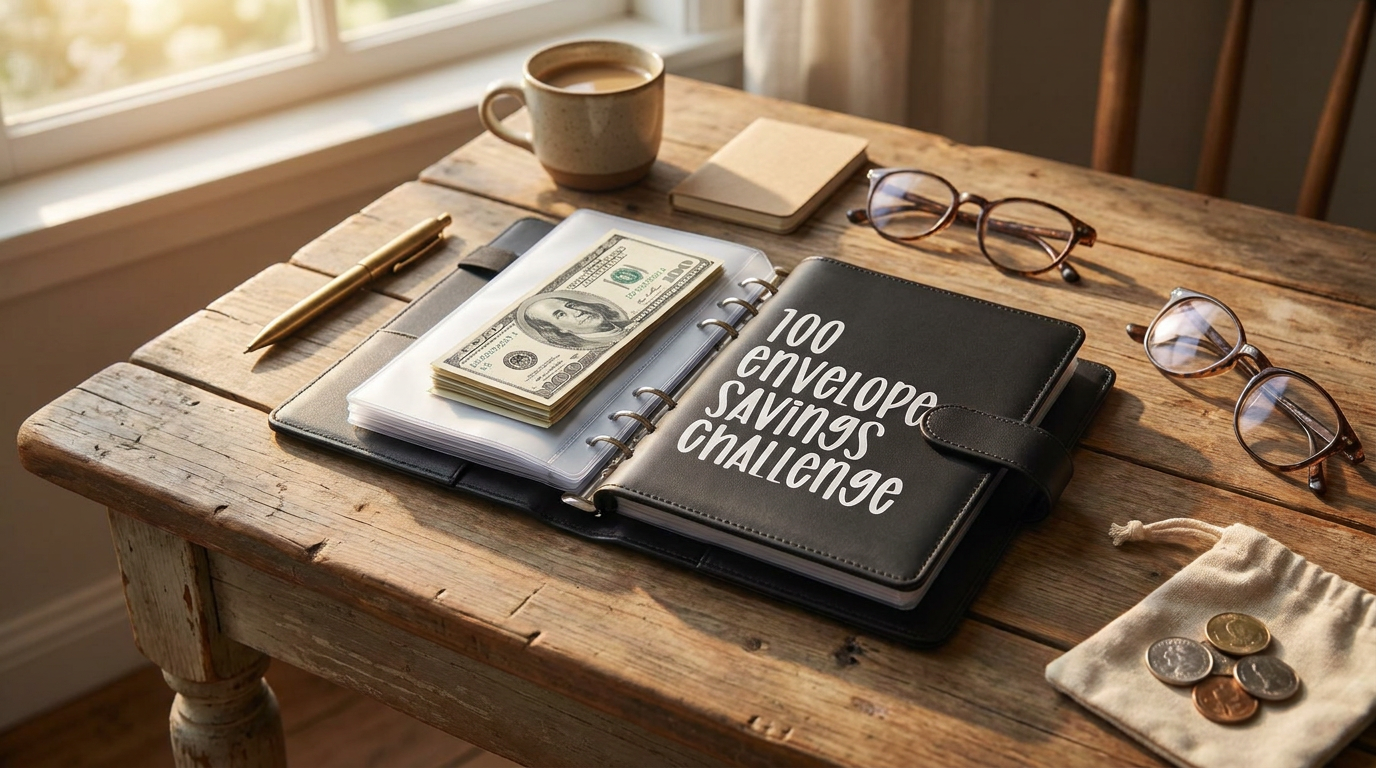
Selecting Durable Materials for 100 Envelope Challenge Binder
May 29, 2026
Selecting the right construction materials for a 100 Envelope Challenge Binder is the difference between a tool that lasts years and one that falls apart before you reach your savings goal. This guide is written for consumers who want to move beyond flimsy paper envelopes and invest in a system that can handle the physical weight of a completed cash challenge.
The Physical Demands of High-Volume Cash Stuffing
When you commit to a 100-day or 100-week savings plan, you aren't just storing paper; you are managing a physical object that grows significantly in weight and girth over time. The primary issue with standard office supplies is that they are designed for flat documents rather than the bulk of 100 individual pockets. According to Baddies and Budgets, while binders come in various sizes, the A6 format has become the gold standard for cash stuffing because it mimics the size of a standard novel, making it portable yet substantial enough to hold currency without folding it excessively.
If you use low-grade materials, the rings often misalign under the pressure of the filled envelopes, which leads to tearing at the punch holes. I have seen many beginners start with basic cardstock or thin plastic sleeves only to find that the friction of sliding cash in and out 100 times creates micro-tears. Furthermore, the spine of a poorly constructed binder will "smile" or bow outward when it reaches the 50-envelope mark. This is why material choice matters more for this specific challenge than it does for a standard monthly planner. You need a cover material that offers structural integrity and internal sleeves that feature reinforced heat-sealed edges to prevent splitting.
Why the 100 Envelope Challenge Binder Uses PU Leather and Reinforced PVC
Photo by https://kaboompics.com/ on Pexels
The 100 Envelope Challenge Binder is engineered specifically to address the failures of DIY or repurposed office binders. The exterior is typically constructed from high-quality PU leather, which offers the tactile feel of genuine leather with significantly better resistance to moisture and stretching. This is critical because a savings challenge kit is often handled daily. Unlike genuine leather, which can be overly heavy and expensive, or thin vinyl which cracks in cold weather, PU leather provides a rigid frame that protects the internal trackers and cash envelopes from bending.
Inside the 100 Envelope Challenge Binder, the focus shifts to the thickness of the transparent sleeves. These are not your standard grocery-store sheet protectors. The kit utilizes a heavy-duty, BPA-free PVC that is clear enough to see the money-saving binder with trackers while remaining thick enough to resist puncture. The 100 envelope savings challenge kit also relies on a robust six-ring binding mechanism. Between a standard three-ring plastic binder and this dedicated six-ring system, I’d go with the six-ring every time because it distributes the weight of the 100 envelopes more evenly, preventing the bottom envelopes from sagging and dragging on the bottom edge of the cover. This specific savings challenge binder set is built for a 5050 savings challenge binder approach or the traditional 1 to 100 method, ensuring the hardware doesn't fail before you hit your financial target.
Decision Framework for Your Savings Hardware
Choosing between a DIY build and a pre-made kit comes down to your available time and your need for durability. If you're on a budget, you might be tempted to repurpose old supplies. Stacy's Savings suggests that a DIY setup can involve Avery monthly dividers, baseball card pages, and a 3-hole punch. This is a functional route if you already own those items, but the baseball card pages are often too small for flat currency, requiring you to fold bills into thirds or fourths, which adds unnecessary bulk to the binder very quickly.
Skip this if you only plan on doing a one-time savings challenge with small change; in that case, a jar is sufficient. However, if you are serious about building a permanent habit, here is what I’d actually buy: a dedicated A6 binder with pre-numbered sleeves. It eliminates the labor of labeling and ensures the dimensions are optimized for currency. When evaluating your options, use this checklist:
- Cover Rigidity: Does the spine have a reinforced core to prevent bowing when full?
- Ring Diameter: Are the rings at least 20mm to 25mm to accommodate the expansion of 100 envelopes?
- Sleeve Clarity: Is the plastic transparent enough to see your progress trackers without removal?
- Closure Type: Does it use a magnetic buckle or an elastic band? (Magnetic buckles are generally more durable for high-volume stuffing).
- Portability: Will the material survive being tossed in a bag or drawer daily for several months?
Shop 100 Envelope Challenge Binder here: https://envelopeschallenge.com
Sources
Photo by https://kaboompics.com/ on Pexels
- Getting Organized: Budget Binder! - Stacy's Savings
- DIY How to make a Budget Binder - Tutorial - YouTube
- Best Budget Binder for Beginners: A Complete Guide