DIY Paper Envelopes vs. PU Leather Budget Binder: 100 Envelope Challenge Comparison
Should you build a DIY paper envelope stack or buy a PU leather budget binder for the 100 Envelope Challenge? If you want maximum durability, waterproof cash protection, compact A5 organization, and a reusable laminated tracker to save $5,050 stress-free, choose the PU leather budget binder. DIY paper envelopes work only for zero-cost short-term testing, but they suffer high failure rates from torn flaps, moisture damage, messy shoe-box clutter, and zero multi-year reusability.
Side-by-Side Scenario Comparison: Paper Envelopes vs. PU Leather Binder
| Budgeting Scenario | DIY Paper Envelopes | PU Leather A5 Budget Binder | Clear Winner |
| --- | --- | --- | --- |
| Accidental Liquid Spills (Kitchen Table / Coffee) | Paper absorbs moisture immediately; ink bleeds and cash risks water damage or tearing. | Transparent PVC sleeves are 100% waterproof; PU leather cover wipes clean instantly. | PU Leather A5 Binder |
| Family Budgeting with Kids (Frequent Handling) | Paper flaps tear at seams; self-adhesive strips degrade and lose stickiness. | Scratch-resistant PU leather and reinforced pouch seams withstand enthusiastic little hands. | PU Leather A5 Binder |
| Stacking & Storing 100 Stuffed Envelopes | Creates an unorganized, bulky shoe-box pile that easily tips over and loses sequence. | Neatly organized in a compact 9x7 inch A5 6-ring binder that fits on any bookshelf or in a safe. | PU Leather A5 Binder |
| Reusing for Round 2 ($10,100 Saved) | Requires replacing all 100 envelopes, re-labeling, and printing a new tracker card. | Includes a laminated dry-erase tracker; transparent pouches wipe clean for infinite savings cycles. | PU Leather A5 Binder |
| Upfront Cost & Initial Setup Time | Near $0 upfront; requires 1–2 hours of manual numbering, labeling, and tape prep. | Modest initial investment; pre-printed 1–100 pouches and reusable tracker ready in 60 seconds. | DIY Paper (Cost) / Binder (Time) |
Here is how paper envelopes compare directly against a PU leather A5 binder across real-life household savings conditions:
Failure Modes & Trade-offs: Paper Envelopes vs. A5 Binder System
Pros
- PU Leather Binder: Waterproof transparent pouches prevent cash damage from accidental household spills.
- PU Leather Binder: Scratch-resistant A5 cover keeps all 100 envelopes bound in numerical order.
- PU Leather Binder: Includes a laminated dry-erase tracker so you can complete endless $5,050 challenges.
- DIY Paper: Zero initial cash outlay if you already have standard office supplies at home.
- Paper Failure Mode: Paper envelope seams split under the weight of multiple folded cash bills.
- Paper Failure Mode: Licked or taped adhesive flaps fail, scattering loose cash across storage boxes.
- Paper Failure Mode: Non-waterproof paper turns soft and degrades when exposed to humidity or spills.
- Binder Limitation: Requires a small upfront product purchase compared to free scrap paper.
Financial Coach Tip: How Physical Systems Prevent Savings Abandonment
In financial coaching, the number one reason people quit the 100 Envelope Challenge before reaching envelope #100 isn't a lack of money—it's disorganization fatigue. When cash is stored in a messy paper pile in a drawer, out-of-sight means out-of-mind, and envelopes get misplaced. A structured A5 binder acts as a visual 'savings trophy.' Keeping it on your desk or bookshelf provides daily tactile motivation, making the act of slipping cash into numbered vinyl sleeves deeply satisfying for both adults and kids.
Which Challenge Storage System Fits Your Budgeting Style?
- Are children participating, or is your budget area subject to spills? → Yes: Go to PU Leather A5 Binder (Waterproof & Tearproof). No: Do you plan to repeat the $5,050 challenge for future goals?
- Do you plan to repeat the $5,050 challenge for future goals (e.g., vacation, emergency fund)? → Yes: Go to PU Leather A5 Binder (Reusable Laminated Tracker). No: Do you have 2 hours to manually label and prep 100 paper envelopes?
- Do you have 2 hours to manually label and prep 100 paper envelopes? → Yes: DIY Paper Envelopes (Temporary One-Time Test). No: PU Leather A5 Binder Kit (Ready-to-Use 1-100 Pre-Labeled)
Core Takeaways: Why Your System Choice Dictates Challenge Success
Summary of critical comparison points for saving $5,050:
Buying Advice: Who Should Stick to Paper vs. Invest in a Binder
While DIY paper envelopes cost almost nothing upfront, they frequently tear, absorb moisture, create bulky box clutter, and require replacement every round. A PU leather A5 budget binder provides scratch-resistant protection, waterproof zip pouches labeled 1-100, and a reusable laminated tracker that ensures long-term organized saving.
Best choice for
- PU Leather Budget Binder — Waterproof transparent vinyl pouches withstand spills, sticky hands, and frequent unzipping without ripping.
- PU Leather Budget Binder — The dry-erase laminated tracker and durable binder construction allow infinite savings cycles without buying new supplies.
- DIY Paper Envelopes — Allows immediate start using scrap paper or standard #6 envelopes if you are unsure about completing the challenge.
- Avoid paper envelopes if storing money in kitchen or dining areas where drinks can spill.
- Avoid unnumbered DIY paper systems if you lack time to write numbers 1 to 100 and construct a manual tracking sheet.
- Digital Spreadsheet Savings — Lacks the psychological tactile benefit of physical cash stuffing, which studies show reduces impulse spending.
Featured Solution: The 100 Envelope Challenge Binder Kit
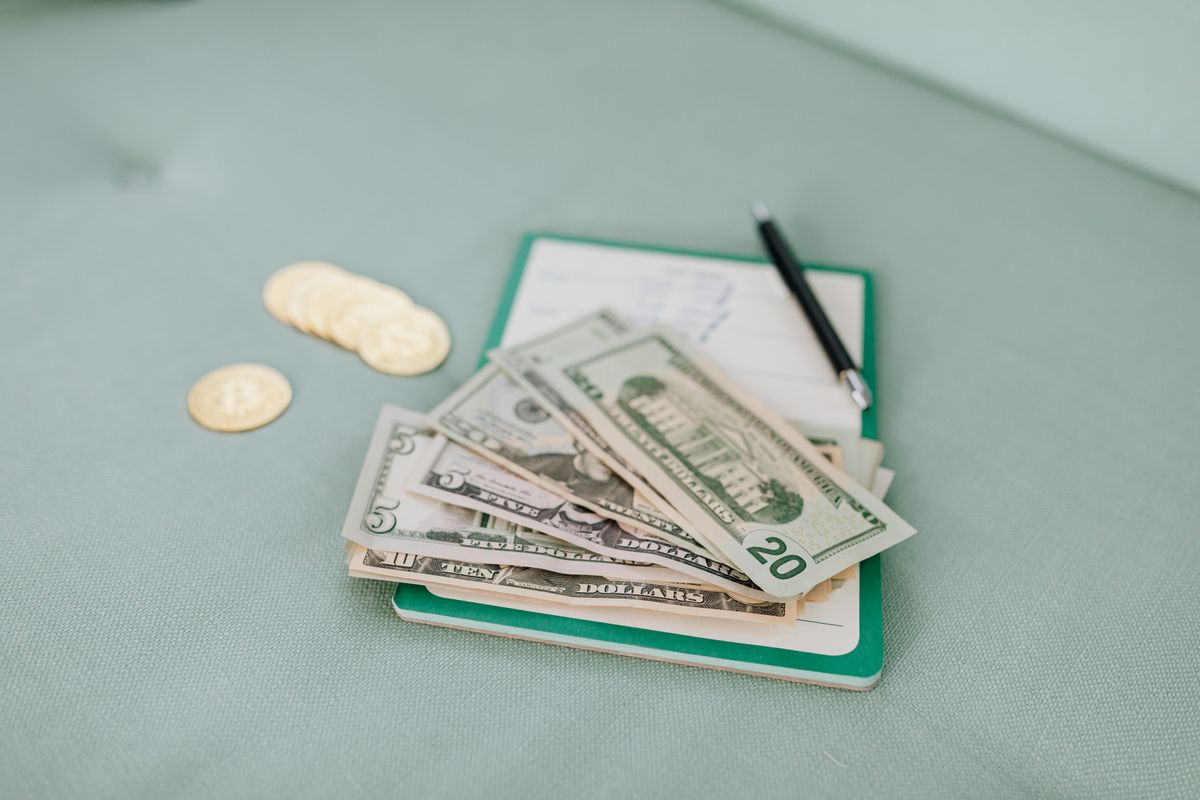
Photo by https://kaboompics.com/ on Pexels
The ultimate cash organizer designed to make saving $5,050 simple, durable, and fun for the entire family.
Real-World Budgeting Scenarios: Paper vs. Binder
Family Budget Night with Young Kids — Use the PU Leather Binder. Children love searching for the bright, pre-printed numbers 1–100 and sliding bills into transparent pockets. Paper envelopes tear easily when kids try to open glued flaps.
Kitchen Table Coffee Spill — Use the PU Leather Binder. The waterproof PVC sleeves protect your accumulated cash from liquid damage. Paper envelopes absorb liquid immediately, ruining both envelopes and banknotes.
Storing Cash in a Home Safe or Bookshelf — Use the PU Leather Binder. Measuring just 9x7 inches, the A5 binder stores upright like a book. 100 loose paper envelopes require a separate plastic bin or shoe box that takes up significant desk space.
See how both systems hold up during common everyday budgeting situations:
When embarking on the 100 Envelope Challenge, your primary goal is to build a consistent money saving habit that yields $5,050 in cash reserves. However, the physical mechanism you use to store that cash plays a massive role in whether you complete all 100 days or abandon the effort midway.
Material Longevity & Structural Weaknesses
Standard paper envelopes (typically made from 20lb bond paper) are designed for single-use postal delivery, not repeated cash stuffing. As you insert folded bills into higher-denomination envelopes—such as envelope #85 or #98 containing multiple $20 and $50 bills—paper seams experience high tension. Over weeks of handling, paper flaps fray, self-adhesive glue dries out or collects dust, and envelope corners tear.In contrast, the PU leather A5 binder utilizes heavy-duty 6-ring binding and heat-sealed transparent PVC pouches. PVC pouches exhibit high tensile strength, resisting tears even when stuffed with crisp bills and coins. The scratch-resistant PU leather outer shell shields your cash from environmental dust, pet hair, and accidental drops.
Storage Footprint and Ergonomics
Have you ever stacked 100 cash-filled paper envelopes? As envelopes accumulate cash, they expand unevenly. Envelope #1 remains flat, while envelope #99 bulges. In a box or tray, this creates a top-heavy, messy pile that easily spills over during cash-stuffing sessions.An A5 budget binder (measuring 9 inches tall by 7 inches wide) constrains all 100 envelopes within a rigid, neat format. The 6-ring mechanism allows sleeves to turn smoothly like pages in a book. You can instantly flip to envelope #42 without disturbing envelopes #1 through #41.
Amortized Cost Per Challenge Round
While DIY paper envelopes appear free at first glance, the hidden costs add up. Purchasing 100 quality paper envelopes, printer ink for tracking grids, decorative stickers, and a plastic storage box costs between $8 and $15. Because paper envelopes degrade, repeating the challenge for your next goal—such as a vacation fund or Christmas budget—requires purchasing all those supplies again.Investing once in a durable PU Leather Binder Kit gives you a reusable laminated tracker and 100 permanent waterproof pouches. Wipe the tracker clean with a dry-erase marker at the end of Round 1, and your cost per challenge drops to zero for every subsequent $5,050 saved.
Frequently Asked Questions: DIY Envelopes vs. Budget Binders
Clear answers to essential questions regarding envelope challenge systems:
Your Next Steps to Start Saving $5,050
Your decision: Choose between a temporary paper setup or a multi-year waterproof PU leather binder kit for your family budgeting goals.
Do this next: Order the 100 Envelope Challenge Binder kit complete with pre-labeled 1-100 waterproof transparent pouches and a reusable laminated tracker to begin saving $5,050 stress-free.
- Read next: A5 Budget Binder Setup & Management Guide
- Read next: How to Teach Kids About Saving Money With Cash Envelopes
100 Envelope Challenge Binder (Color PU Leather A5 Binder with 1-100 transparent pouches and laminated tracker).
Ready to take control of your financial goals with an organized, family-friendly cash savings system?