The Flaw in All-in-One Budget Binders with Cash Envelopes
Your all-in-one budget binder is sabotaging your savings goals by mixing long-term challenges with short-term, variable spending. The conventional wisdom says a single budget binder with cash envelopes is the pinnacle of financial organization, a unified command center for every dollar. This analysis argues that this consolidation is a critical design flaw that actively works against your primary wealth-building objectives.
The Problem of Psychological Proximity
Here's the part nobody talks about: decision fatigue. When your 'House Down Payment' envelope sits next to your 'Weekly Groceries' envelope, the physical proximity creates a psychological one. Every time you open the binder, you are forced to make a micro-decision to not 'borrow' from a long-term goal for a short-term want. This constant negotiation with your future self drains willpower. Behavioral science documents how the quality of decisions deteriorates after a long session of choice-making, a phenomenon known as decision fatigue. An all-in-one system unnecessarily multiplies these decision points, making all cash appear equally available and blurring the line between 'spending' and 'investing in your future'.
Building a Financial Firewall

Photo by https://kaboompics.com/ on Pexels
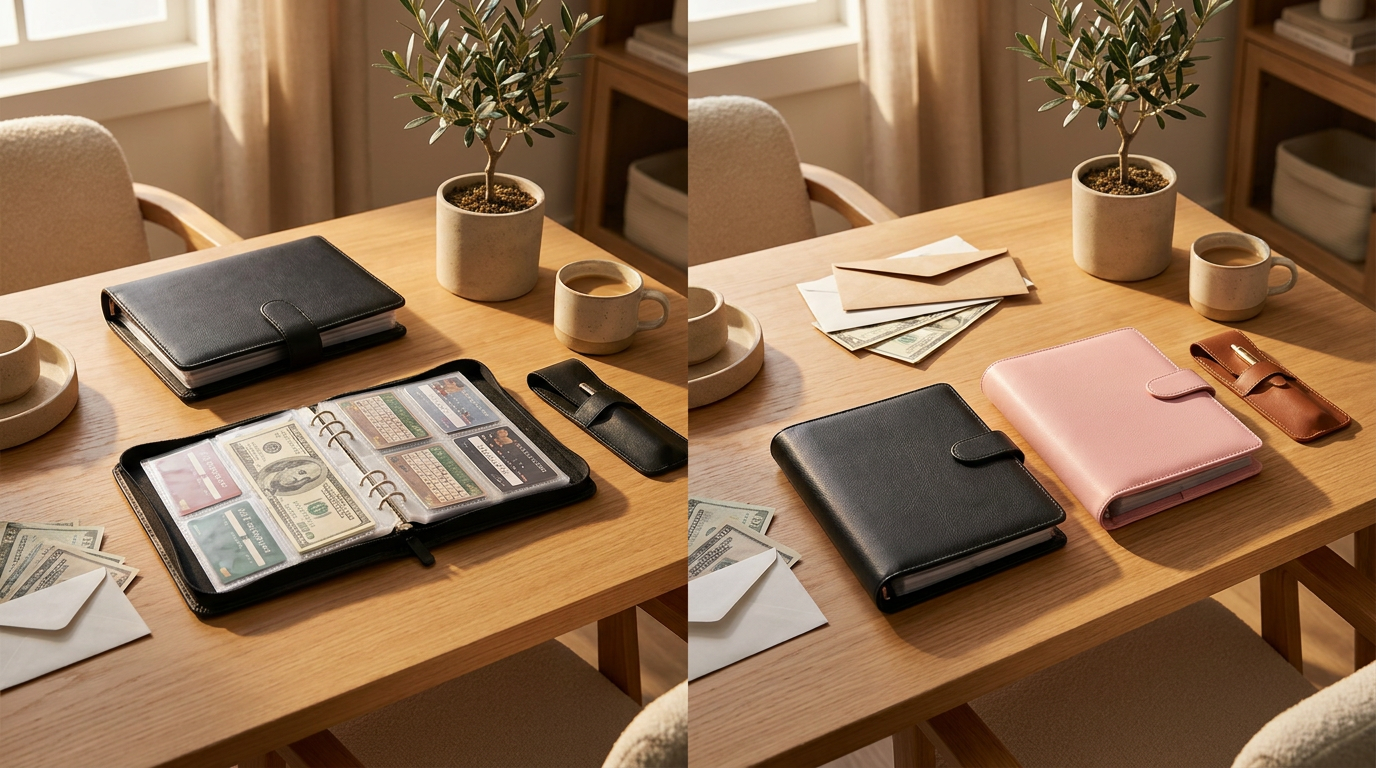
The solution is not to abandon cash envelopes but to compartmentalize them with purpose. A dedicated 100 Envelope Challenge Binder should function as a financial vault, not a wallet. By physically separating your primary savings challenge from your variable spending binder, you create a psychological firewall. This separation makes accessing challenge funds a deliberate, high-friction event, protecting your most significant goals. This approach fundamentally changes how to organize a 100 envelope binder; it is no longer about fitting everything in one place, but about creating intentional separation for maximum goal security.
Protecting Goal Integrity
The objective is not just to save, but to achieve a specific target. The 100 Envelope Challenge is designed to accumulate $5,050. When this goal is pursued in isolation, its progress is clear and protected. Mixing it with fluctuating expense categories like 'Dining Out' or 'Entertainment' obscures the primary mission. The final 100 envelope challenge results are more likely to be compromised when the funds are co-mingled and visually accessible for impulse reallocation. While a physical binder has advantages over digital tools, its structure must support the goal, not tempt the user. The debate of a 100 envelope challenge binder vs savings apps often misses this crucial point about physical fund partitioning.
I'll change my mind when a binder system is introduced that uses lockable sections or time-delayed access mechanisms to enforce the separation between long-term and short-term funds within a single unit. Until then, the evidence points to separation as the superior strategy for serious savers.
Is a budget binder with cash envelopes still a good idea?

Photo by https://kaboompics.com/ on Pexels
Yes, but their effectiveness is maximized by using two separate systems. Use a simple cash envelope wallet or a small binder for daily and weekly variable expenses. A dedicated, separate 100 Envelope Challenge Binder should be used exclusively for your primary, long-term savings goal. This separation prevents the temptation to dip into your savings for non-emergencies.
How much money is in a 100 envelope challenge?
A completed 100 Envelope Challenge accumulates a total of $5,050. The challenge involves numbering 100 envelopes from 1 to 100. You then systematically fill each envelope with the dollar amount corresponding to its number (e.g., envelope #25 gets $25, envelope #98 gets $98). The process breaks a large savings goal into manageable, incremental steps.