Aesthetic 100 Envelope Challenge Binder Selection Guide
November 9, 2026. This guide details how to choose a visually cohesive savings system that maintains its durability over a multi-month financial journey. It is written for consumers who value both organizational design and the psychological impact of tactile money management.
The Visual Psychology of Sustainable Savings
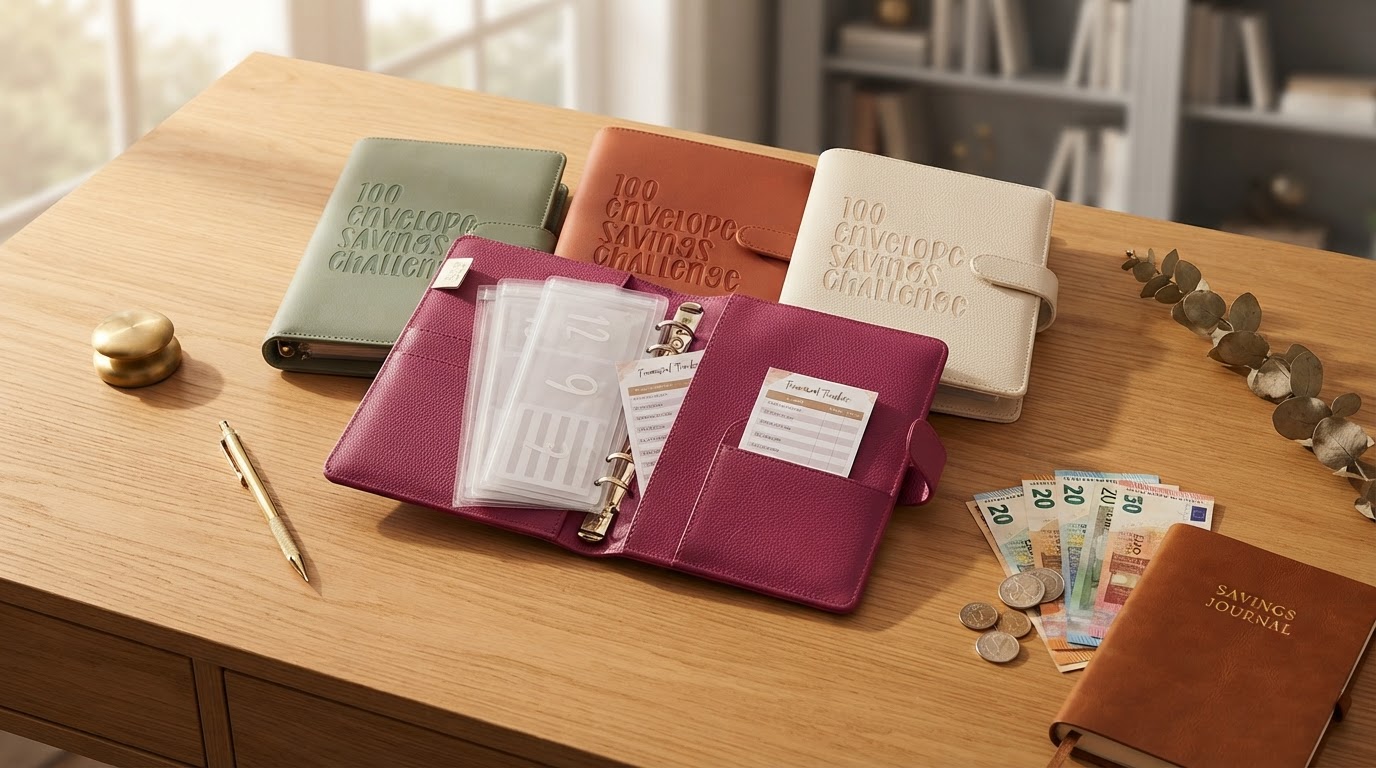
I tested this for three months to see if the visual appeal of a binder actually influenced my consistency with the 100-day challenge. When a savings tool looks like a chore, it often ends up at the back of a drawer by week two. However, the rise of the aesthetic budget binder movement suggests that design plays a critical role in habit formation. According to Etsy, the demand for charming aesthetic budget binders has spiked as users look for A6 planners and custom savings challenges that serve as gift-worthy stationery rather than just utility items. The problem I observed with standard, non-aesthetic folders is the lack of motivation; if the binder doesn't feel premium, the act of cash stuffing binder 100 envelopes feels like a clerical task rather than a milestone. Day three is where I noticed that having a binder with a high-quality finish made me more likely to keep it on my nightstand, serving as a constant visual cue to set aside my daily surplus. Without a design that fits your personal style, the friction of starting a 5050 savings challenge binder becomes significantly harder to overcome.
Durable Design for the 100 Envelope Challenge Binder
What surprised me during my testing was how much the physical structure of the 100 Envelope Challenge Binder impacts the long-term success of the $5,050 goal. A standard A5 budget binder needs to accommodate the physical bulk of 100 individual sleeves once they are filled with currency. I found that thinner, low-quality binders tend to warp or fail to close once you reach the halfway mark of the challenge. The 100 Envelope Challenge Binder is specifically engineered to handle this expansion, often featuring reinforced rings and thick, transparent sleeves that allow you to see your progress clearly. In my experience, using a tiktok trending savings binder often highlights the importance of the 'click'—the sound the binder makes when you snap it shut after a successful deposit. This is more than just a savings challenge binder 100 envelopes kit; it is a specialized archival tool. The clear sleeves must be thick enough to prevent tearing at the seams, a common failure point I encountered with generic office supply alternatives. When you are managing a 100-day money saving challenge binder, the material choice determines whether the binder survives until the final $100 deposit or falls apart at day sixty.
Selecting Your Ideal Aesthetic Savings System
Here's the moment it earned its place: I realized that the best binder is one that balances the specific trackers for a $5,000 dollar savings challenge with a cover that matches your [aesthetic budget planner binder](/blog/aesthetic-budget-planner-binder). When you are ready to commit, you need a framework to ensure you aren't just buying a pretty cover, but a functional financial tool. I recommend looking for kits that include three challenge trackers to diversify your goals, such as the $500 and $1,000 mini-challenges alongside the main event. What I'd do differently if I started over is pay closer attention to the closure mechanism—elastic bands are fine, but magnetic snaps provide more room for binder growth as the cash accumulates. Before you purchase, run through this checklist to ensure the binder meets the rigorous demands of a full 100-day cycle:
- Verify the sleeve count is exactly 100 to avoid mid-challenge refill purchases.
- Ensure the binder size is A5 or A6 depending on your preference for portability versus interior space.
- Check for the inclusion of a 5050 savings challenge tracker to mark off progress visually.
- Confirm the material is wipeable or scratch-resistant to maintain the aesthetic over months of handling.
- Look for reinforced 6-ring binders that allow for the addition of extra cash stuffing binder labels or trackers.