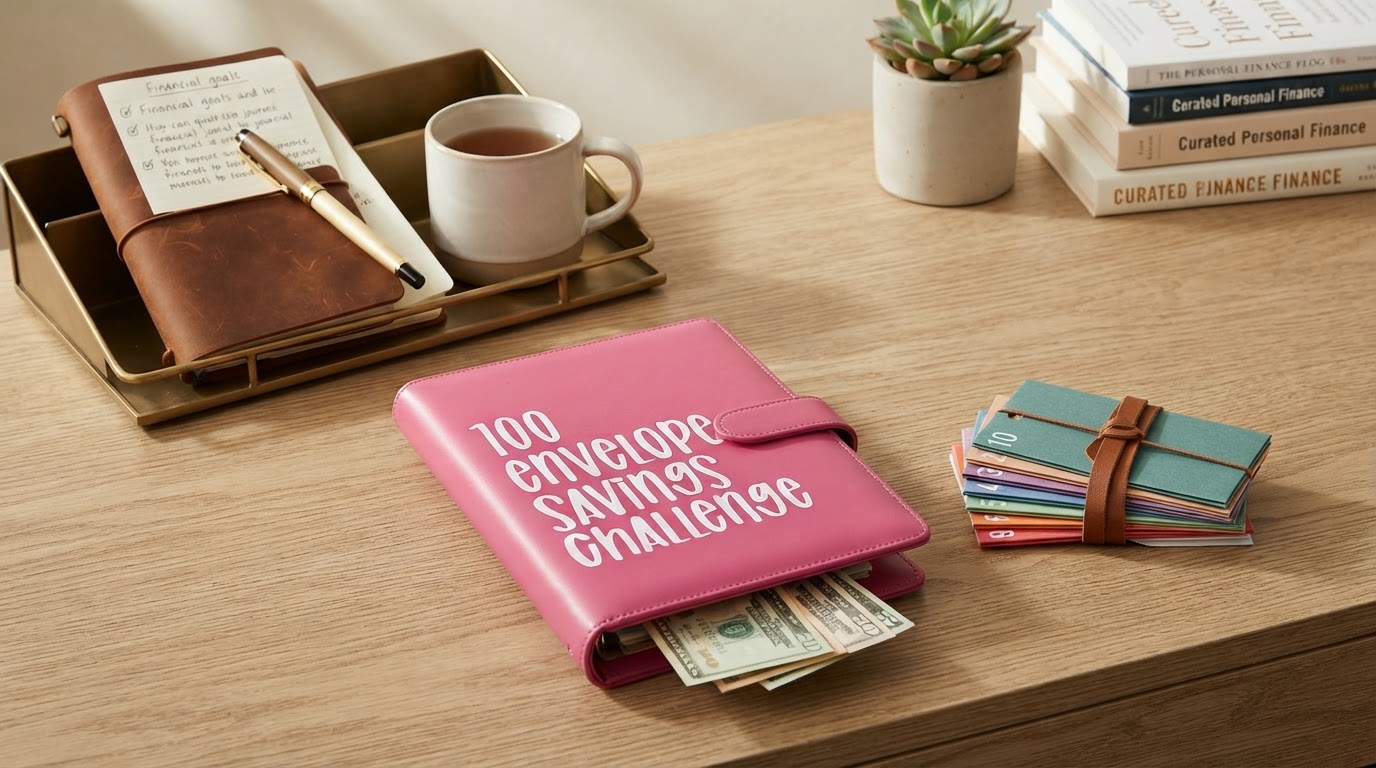
Mastering the Cash Stuffing Binder 100 Envelopes Method
October 16, 2026. This analysis examines the structural requirements and financial methodology of the cash stuffing binder 100 envelopes system. It is designed for consumers seeking a tactile, high-capacity framework to manage significant savings goals through physical currency allocation. Think of it as a matrix of volume and durability; the success of this method depends entirely on the physical integrity of the storage vehicle and the consistency of the tracking mechanism.
The Friction of Digital Savings and Physical Solutions
Many consumers struggle with the abstraction of digital banking, where numbers on a screen fail to trigger the psychological reward associated with saving. This has led to a significant resurgence in physical budgeting, specifically the cash stuffing binder 100 envelopes approach. The primary problem faced by modern savers is "frictionless spending"—the ease with which digital transactions occur without cognitive reflection. By reintroducing physical touchpoints, savers can visualize their progress in real-time. According to Peter Pauper Press, these systems are versatile enough to help users save varying amounts such as $100, $1,020, or the traditional $5,050, often including reusable tracker cards to maintain momentum.
However, the logistical challenge of managing 100 individual slots requires a specific hardware configuration. Standard office binders often lack the gusset depth to handle the bulk of 100 filled envelopes, leading to ring failure or cover warping. This is why specialized cash stuffing envelopes for binder are engineered with thinner, high-tensile materials to minimize footprint while maximizing capacity. Without a dedicated system, the physical volume of the currency becomes a deterrent rather than a motivator. Once you see it this way, the transition from a standard folder to a purpose-built 100 Envelope Challenge Binder becomes a matter of structural necessity rather than just an aesthetic choice. Users often find that an aesthetic savings challenge tracker binder provides the visual cues necessary to stay engaged over the long term, bridging the gap between a chore and a rewarding habit.
Structural Engineering of the 100 Envelope Challenge Binder
The 100 Envelope Challenge Binder is not merely a collection of pockets; it is a calibrated financial tool. Two axes matter here: mechanical durability and organizational density. The binder must support the weight of up to 100 individual currency deposits without the rings misaligning. Research into high-capacity systems shows that a 30mm ring mechanism, such as those found in personal size binders from Christina Loves Planning, offers the necessary clearance for thick envelope stacks while remaining portable. The 100 Envelope Challenge Binder utilizes this high-density architecture to ensure that even as the saver approaches the final envelopes, the binder remains functional and secure.
Integration with social trends has also influenced the design of these tools. The rise of the tiktok trending savings binder has standardized the use of A5 and A6 formats, which balance internal space with external portability. The 100 Envelope Challenge Binder specifically addresses the "bulk problem" by utilizing tiered pocket layouts. This prevents all the cash from pooling at the bottom of the binder, which would create a wedge shape that prevents the cover from closing. By distributing the currency evenly across the vertical plane of the binder, the system remains flat. This is particularly important for those using an aesthetic budget binder 100 envelopes where visual symmetry is a key component of the user experience. The inclusion of dedicated trackers allows for the "snowball method" of savings, where users can see their progress at a glance without having to manually count every envelope, as demonstrated in various community tutorials like the quarter-two updates found on YouTube.
Decision Framework for Selecting a Savings System
Choosing the right hardware for a 100-day or 100-envelope challenge requires an objective assessment of your savings environment and volume expectations. The decision rule: if your goal exceeds $5,000, prioritize ring tension and cover thickness over decorative elements. A binder that fails mid-challenge creates a significant psychological barrier to completion. When evaluating a 100 Envelope Challenge Binder, consider the closure mechanism—zipper closures provide better security for loose change or high-volume cash, while snap closures offer quicker access for daily stuffers.
Before finalizing a purchase, verify that the kit includes a comprehensive tracking system. Many users find that a savings challenge binder is only as effective as its documentation. The 100 Envelope Challenge Binder typically includes pre-numbered slots, which eliminates the administrative burden of labeling and allows the user to focus entirely on the act of saving.
Use this checklist to evaluate your options:
- Verify the ring diameter is at least 25mm-30mm to accommodate 100 filled envelopes.
- Ensure the cover material is reinforced (PU leather or heavy-duty PVC) to prevent bowing under weight.
- Check for the inclusion of a reusable tracker card to monitor progress without needing replacements.
- Confirm the envelope material is transparent or semi-transparent for easy currency verification.
- Assess the closure type to ensure it can contain the projected thickness of your total savings goal.
Sources
- My 100 Envelope Savings Challenge Binder - Peter Pauper Press
- Updating My 100 Envelope Savings Challenge | 2nd Quarter - YouTube
- 30mm Cash Envelope Binders, Personal Size