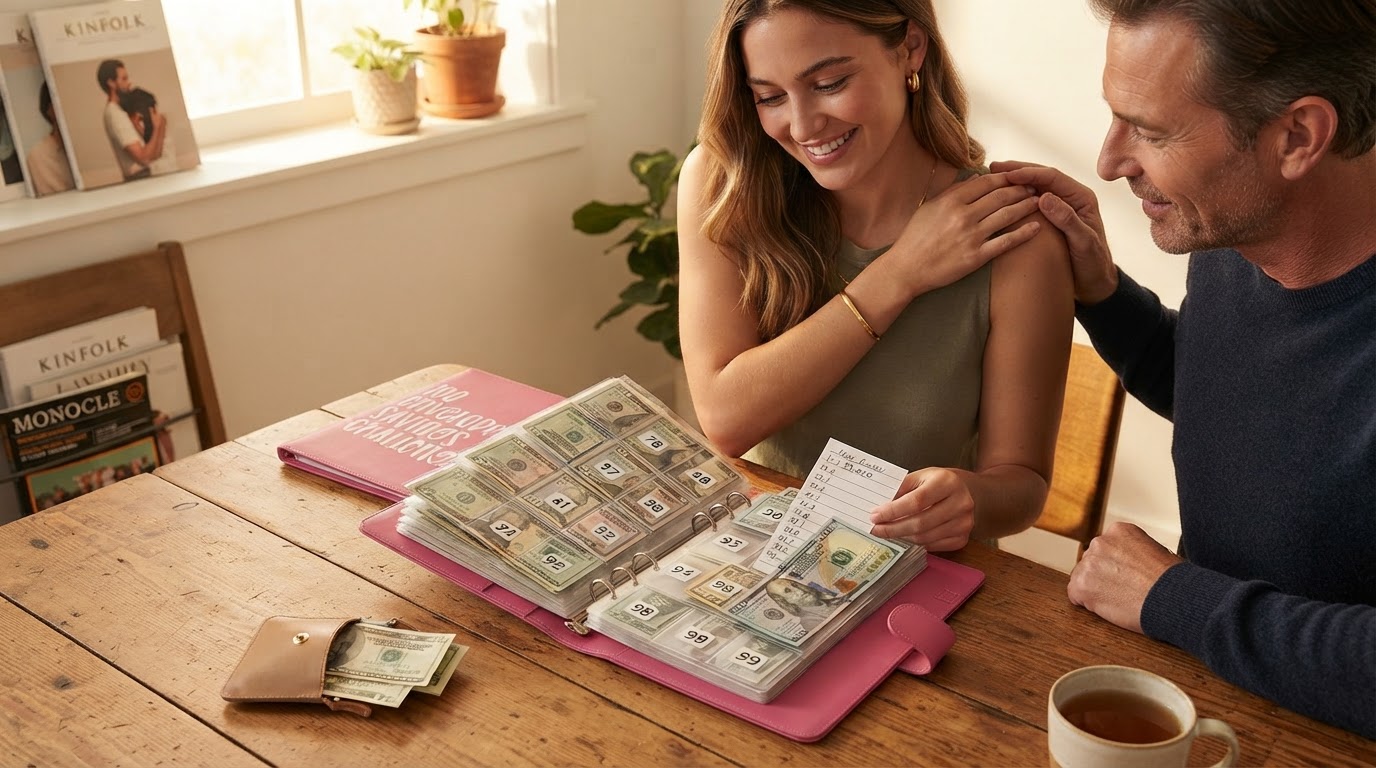
How do I use a 100 Envelope Challenge Binder for savings?
September 17, 2026 — Using a 100 Envelope Challenge Binder involves systematically filling numbered pockets with specific cash amounts to reach a predetermined savings goal, typically $5,050, by the end of the challenge.
Consumers looking to stabilize their finances often turn to tactile savings methods to counteract the friction of digital spending. Building an emergency fund requires a visual feedback loop that physical binders provide more effectively than a standard bank app. Whether you are using a money saving binder with envelopes or a specialized kit, the goal is to create a consistent habit of setting aside small denominations until they accumulate into a significant safety net.
Which binder size is best for emergency savings?
Between these two, I’d go with the A5 size for a full emergency fund because it accommodates the volume of 100 separate envelopes more comfortably than the smaller A6 alternatives. While the A6 size is highly portable and fits nicely in a handbag, it often lacks the capacity for larger bills or the full 100-pocket inserts needed for the classic challenge. For example, a 1K Emergency Fund Savings Challenge Binder available on Etsy utilizes the A6 format with a red and white checkered design, but it is explicitly capped at a $1,000 goal.
If you're on a budget and only need to save a small starter fund, the A6 works. However, for a standard $5,050 goal, the A5 reusable 100 envelope challenge binder is the industry standard for a reason. It provides enough physical space so the binder doesn't become impossible to close once you reach the halfway mark. Skip this if you prefer digital banking, as the physical bulk of a filled A5 binder is significant.
How do you track progress without getting overwhelmed?
Here’s what I’d actually buy: a binder that includes a dedicated dashboard or tracker sheet to prevent the need for manual counting every time you add a bill. Visual trackers allow you to color in a corresponding icon each time an envelope is filled, which provides immediate psychological reinforcement. According to product listings on eBay, an Emergency Fund Savings Challenge Dashboard is often sized at 7" x 4" to fit ringed binders, serving as a progress report that sits at the front of your system.
Consistency is more important than the amount you contribute each week. You can find various money saving binder ideas that suggest alternating between high and low numbers to keep your cash flow steady. By using a reusable cash envelope system binder, you can reset the challenge once you hit your goal, allowing you to build multiple tiers of savings—such as a three-month vs. a six-month emergency fund—without purchasing new equipment.
Quick answers
Q: How much money do you save total in the 100 envelope challenge? A: The standard 100 envelope challenge results in a total of $5,050 if you fill envelopes numbered 1 through 100. Some specialized bundles, like those found on Pinterest, include trackers for specific goals like a $5k Savings Binder or a smaller $1k starter fund.
Q: What is the difference between a coil-bound and a ring-bound binder? A: Ring-bound binders allow you to add or remove individual envelopes and dashboards, whereas coil-bound versions, such as those sold by Christina Loves Planning for $25.00, are permanent and cannot be easily customized with extra inserts.
Q: Can I use this binder for more than one savings goal? A: Yes, many users buy a binder bundle that includes 85+ different challenges, allowing you to track an emergency fund, a vacation fund, and a car down payment all within the same A5 or A6 housing.
Learn more about 100 Envelope Challenge Binder at https://envelopeschallenge.com.