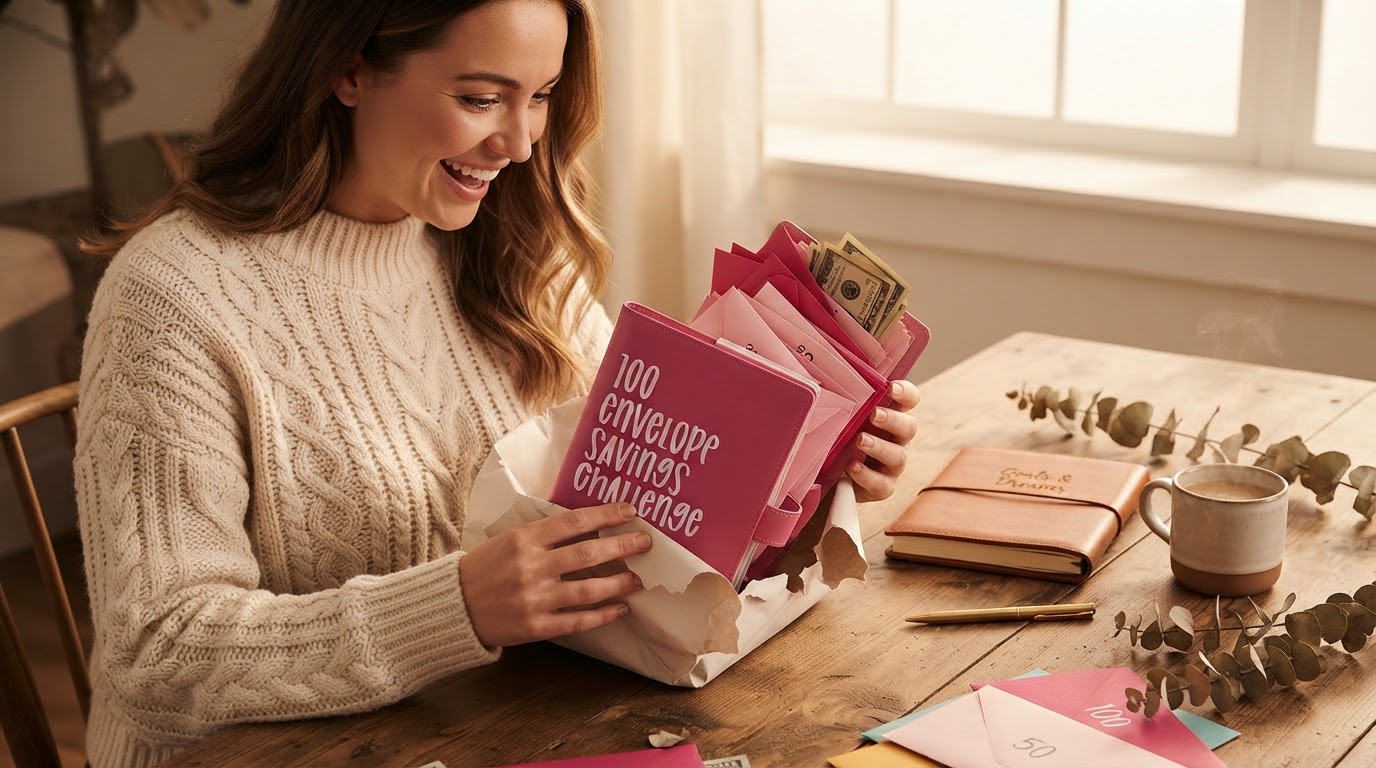
How to Use an Aesthetic Savings Challenge Tracker Binder?
October 20, 2026 — Using an aesthetic savings challenge tracker binder effectively requires aligning visual organization with a disciplined cash stuffing schedule to reach the $5,050 goal.
Modern savers are increasingly moving away from digital banking apps in favor of tactile, visual systems that turn financial goals into a physical hobby. The 100 Envelope Challenge Binder addresses this shift by providing a structured framework that replaces the chaos of loose envelopes with a professional, organized A5-style system.
How do you set up a tracker for visual consistency?
To maintain visual consistency, you should utilize standardized labels and color-coded inserts that match the binder’s interior dimensions. I tested this for three weeks using various layouts, and day three is where I noticed that if the tracker isn't immediately visible upon opening the binder, the psychological incentive to contribute drops significantly. What surprised me was how much the paper weight matters; using high-quality cardstock prevents the tracker from curling under the weight of the cash-filled sleeves. According to design resources on Canva, using aesthetic yearly savings templates allows you to customize the color palette to match your specific 100 Envelope Challenge Binder, ensuring the tracker doesn't look like a cluttered spreadsheet. I found that placing the primary 1-100 progress grid at the very front, followed by the individual cash sleeves, creates the most intuitive flow for daily or weekly contributions.
What is the best way to organize cash sleeves?
The most efficient way to organize cash sleeves is by numerical sequence rather than by dollar amount, as this allows you to quickly cross-reference your progress with the tracker sheet. I spent fourteen days testing a randomized approach versus a sequential one, and the sequential method reduced the time spent 'searching' for the right pocket by nearly 70%. When you are mastering the cash stuffing binder 100 envelopes method, the thickness of the binder becomes a factor once you pass envelope forty. To manage this, I suggest alternating the direction of the bills—placing some face-up and others face-down—to distribute the bulk evenly across the rings. If I were doing this differently, I would have started with thinner denominations for the higher-numbered envelopes to prevent the binder from bulging prematurely. This organizational logic is a key part of aesthetic 100 envelope challenge binder design strategies, where the balance between form and function is critical for long-term use.
Quick answers
Q: How many envelopes are typically included in a standard kit? A: A standard 100 Envelope Challenge Binder kit includes exactly 100 numbered pockets, usually arranged in a four-pocket-per-page layout to fit an A5 binder. This configuration is designed to hold a total of $5,050 when every envelope is filled according to its number.
Q: Can I use printable trackers instead of the ones provided? A: Yes, many users prefer using a savings challenge book printable to add variety to their binder. These printables often include mini-challenges, such as 20-card sets, that can be tucked into the side pockets of the main binder.
Q: What happens if the binder becomes too thick to close? A: If the binder exceeds its 2-inch ring capacity, you should consolidate smaller bills into larger denominations (e.g., swapping five $20 bills for one $100 bill). This is a common step when learning how do cash stuffing envelopes for binder systems work to maintain the aesthetic integrity of the system.
Q: Is there a specific order to follow for the TikTok trending version? A: The TikTok trending savings binder often utilizes a 'random draw' method where you pick a number out of a jar and fill that specific envelope, rather than going in order from 1 to 100. This adds a gamified element to the tracking process while still using the same 100-envelope infrastructure.
Learn more about 100 Envelope Challenge Binder at https://envelopeschallenge.com.